


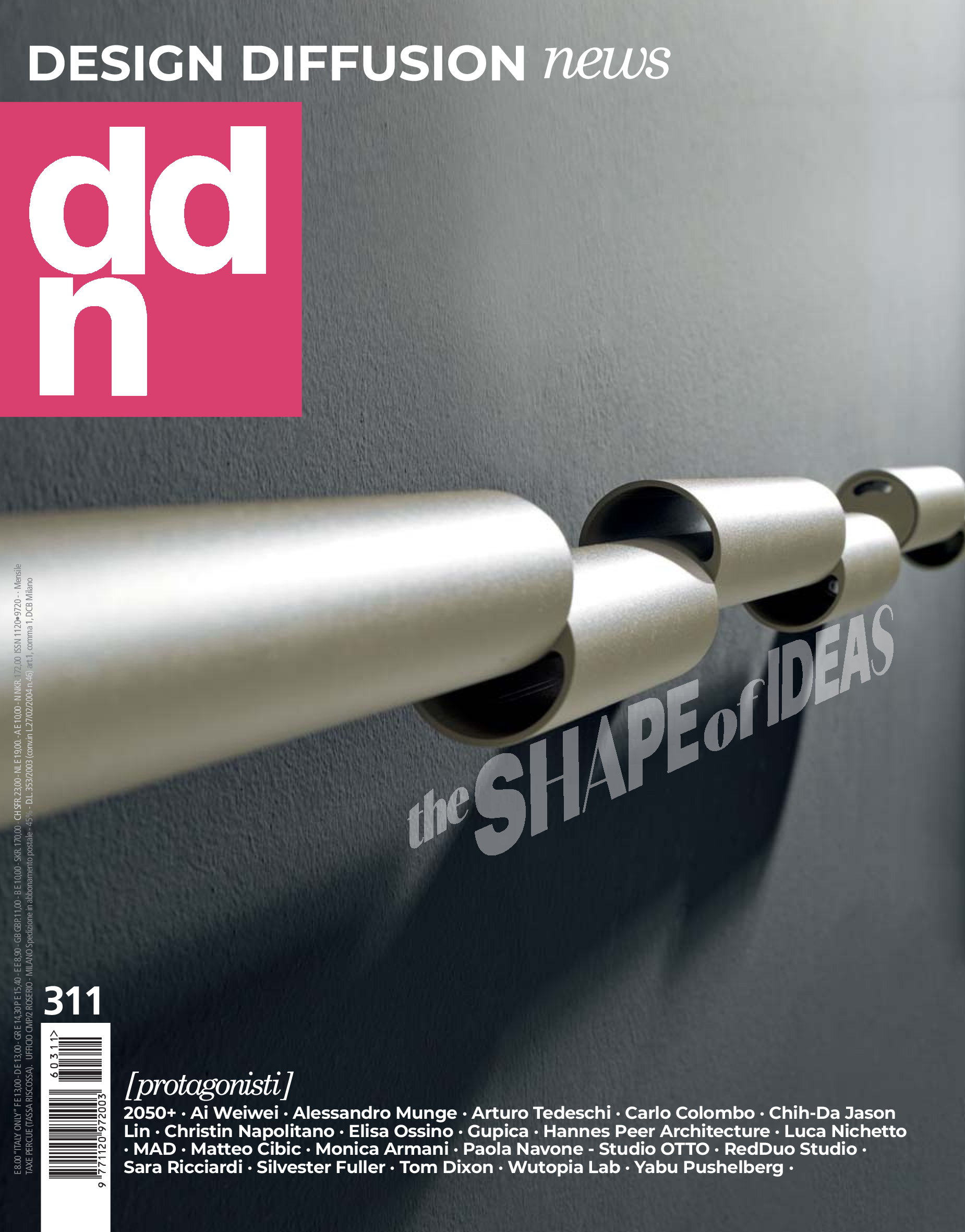
Design does not stop at drafting functions and occupying space; it has always shaped a mental geography and acted as a powerful narrative device. Milan Design Week 2026 strongly confirmed this direction, showcasing design that rejects mere spectacle in favor of authenticity, establishing atmospheres, stories, and moods. The narrative of this issue oscillates between two mirroring souls: on one side, a strong drive toward subtraction brings whispered lighting, delicate geometries, and a silent elegance that demands attention; on the other side, we witness the return of an undisciplined irony and materials revolutionized by technology, both capable of shaking up spaces and surprising us once again.
This same desire to reach the core of things becomes evident when we move past the boundaries of the Milanese week to look at architecture and signature interiors. In the Space section, designing means “digging” into memory and taking away instead of adding, celebrating residences where archaeological restoration dialogues with contemporary fluidity. In the Ofarch section, instead, form becomes a dynamic process and a collective scale: artificial intelligence turns into a real constructive tool in the computational design of Arturo Tedeschi, while the spatial experiences of Wutopia Lab and the monumental regenerations of MAD Architects rewrite the landscape and industrial memory.
Yet, the true center of gravity of this special issue, which revolves around the Salone Internazionale del Mobile di Milano and the Fuorisalone of last April, reveals itself in the Album. Once the spotlight turns off and the adrenaline of the Milanese week settles, the truth of the product remains, from indoor and outdoor living areas to bedrooms and bathrooms. It offers a sharp photography, room by room, of a present that moves away from excess: in 2026, design does not look back, but retains the best to make it happen in the present and future of our homes.