




The Chilean architect is awarded architecture’s highest global honor for his ability to transform the unstable and the ephemeral into shelters of profound humanity
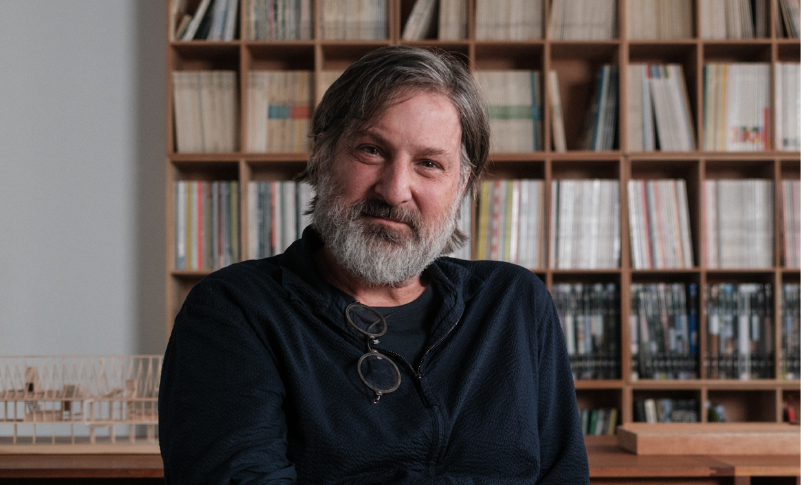
The 2026 Pritzker Architecture Prize, internationally recognized as the Nobel Prize of architecture, has been awarded to Smiljan Radić Clarke. Born in Santiago, Chile, in 1965, Radić becomes the 55th Laureate in the prize’s history, succeeding industry giants thanks to a body of work that eschews repetitive languages to focus on the uniqueness of experience and matter.
“Architecture exists between massive, enduring forms and fragile constructions, as fleeting as the life of a fly,” Radić stated upon receiving the news. “In this tension, we seek to create experiences that carry an emotional presence, encouraging people to pause.”
A Poetics of Uncertainty
According to the 2026 Pritzker Prize jury citation, Radić’s work sits at the crossroads of material experimentation and cultural memory. His structures often appear temporary, unstable, or deliberately unfinished—almost on the verge of disappearing—yet they offer structured, optimistic, and joyful sanctuaries.
Iconic Works: Between Earth and Air
Radić’s portfolio spans three decades and several continents, yet always maintains a rigorous constructive discipline that transforms materials into narratives:
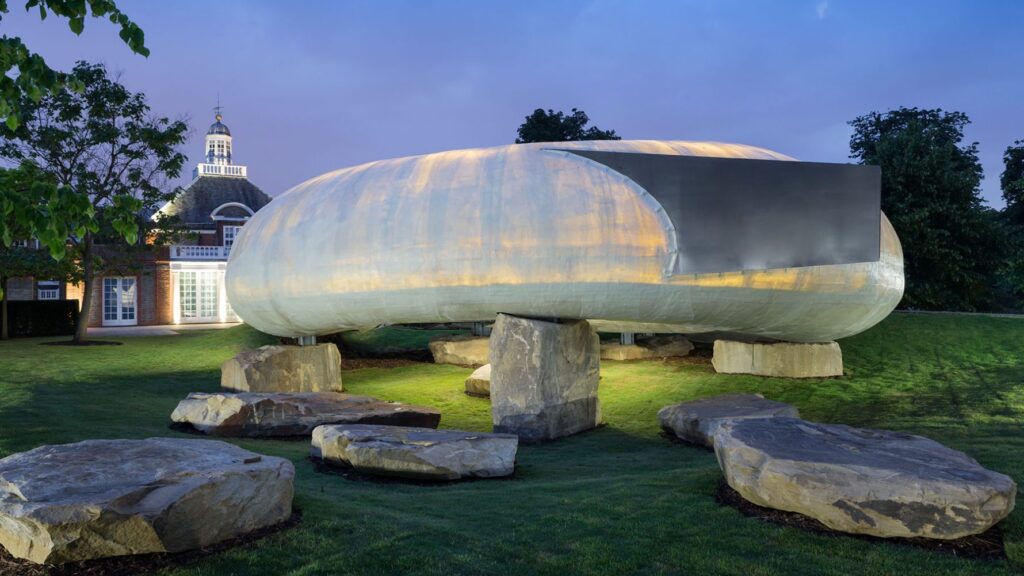
- Serpentine Gallery Pavilion (London, 2014): A translucent fiberglass shell resting on massive local boulders, capable of filtering light and providing shelter without severing visitors from the surrounding park.
- Teatro Regional del Biobío (Concepción, 2018): A semi-transparent envelope engineered to modulate light and support acoustic performances through formal sobriety.
- Chilean Museum of Pre-Columbian Art (Santiago, 2013): An example of adaptive reuse where the underground extension respects the existing historic building, proving that architecture can be about continuity rather than replacement.
- NAVE (Santiago, 2015): A post-natural disaster recovery of an early 20th-century building, where a circus tent on the roof introduces an unexpected lightness that contrasts with the intimacy of the ground floor.
The Human Dimension and the “Foundation of Fragile Architecture”
Radić’s architecture is not conceived as a mere visual artifact; it demands physical presence. Works such as the House for the Poem of the Right Angle or his personal studio, Pequeño Edificio Burgués, demonstrate a quiet emotional intelligence capable of protecting human fragility.
In 2017, he solidified this commitment by founding the Fundación de Arquitectura Frágil in Santiago—a platform for public exchange and an archive exploring his own experimental work and that of other designers.
With upcoming projects in Albania, Switzerland, and the United Kingdom, the awarding of the 2026 Pritzker Prize to Smiljan Radić Clarke marks a pivotal moment for contemporary architecture: the recognition of a practice that, from the “edge of the world,” has succeeded in touching the very essence of dwelling.