




On the occasion of LEGO Day 2026, we explore how the world’s most famous colored bricks have revolutionized the fields of design and urban planning
January 28 marks LEGO Day, the date the patent for the world’s most iconic brick was filed back in 1958. While for many, LEGO represents the ultimate childhood memory, for the big names in contemporary architecture, they have become a serious, versatile, and incredibly creative design tool.
From urban restoration to skyscraper modeling, here is how modern design has embraced the philosophy of the brick.
Bjarke Ingels and the LEGO House: Architecture Mimicking Play
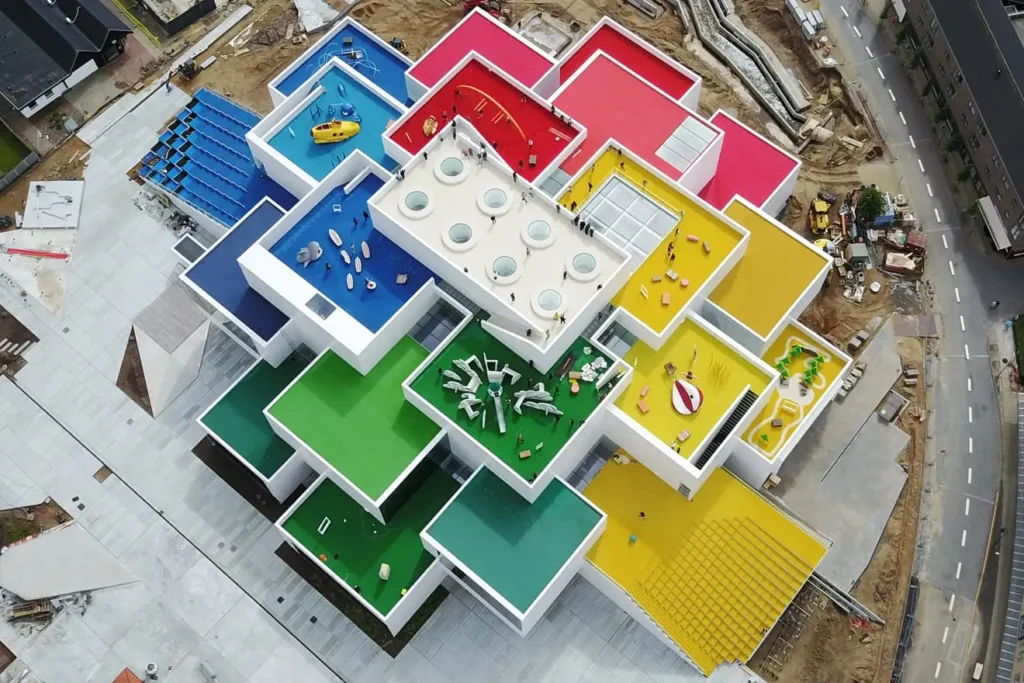
The project that best represents the link between reality and bricks is undoubtedly the LEGO House in Billund, designed by BIG (Bjarke Ingels Group). It is not just a museum, but an architectural work composed of 21 staggered blocks that look as if they were snapped together by a giant hand.
BIG used LEGO not only as aesthetic inspiration but as a literal scale modeling tool to test volumes and spaces before actual construction. It is a perfect example of how the toy’s modularity can transform into an iconic structure spanning thousands of square meters.
Dispatchwork: Repairing the City with Guerrilla Art
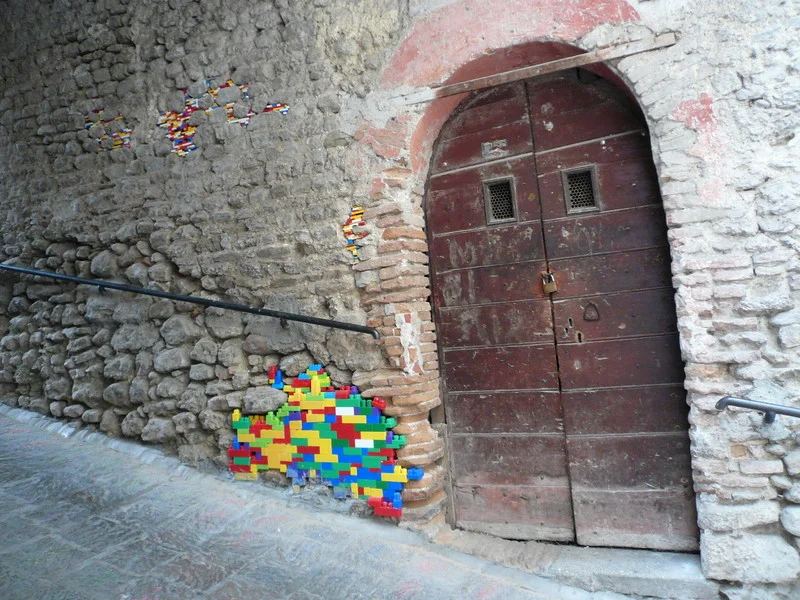
Another fascinating approach is that of German artist Jan Vormann with his project Dispatchwork. The keyword here is creative urban regeneration. Vormann travels the world filling gaps in historic walls or damaged monuments with colorful LEGO bricks.
Instead of hiding the damage with gray cement, the intervention highlights it, inviting passersby to reflect on the passage of time and the maintenance of our cities. It is an example of how design can be playful yet deeply political.
LEGO Architecture Studio: The Professional’s Kit
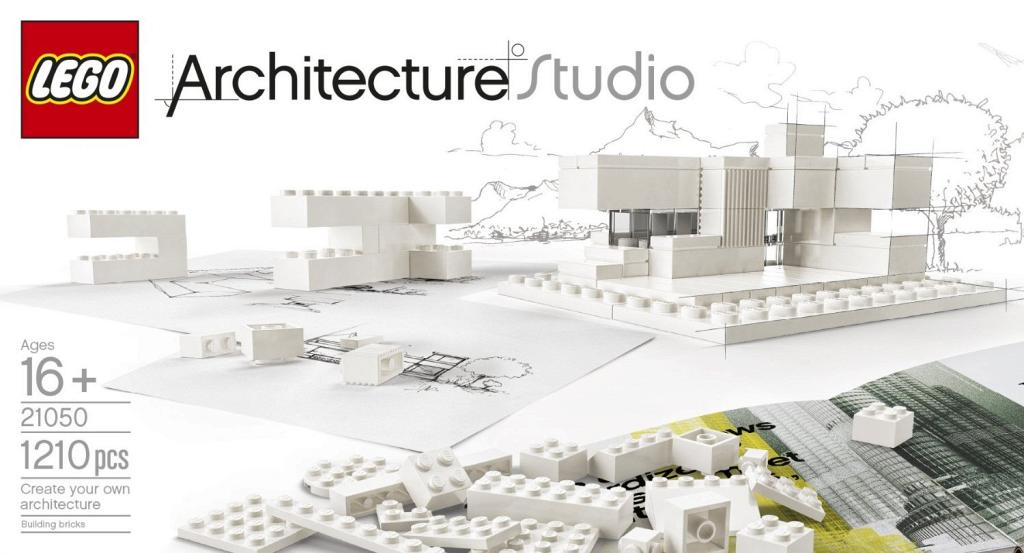
For those who think LEGO is limited to pirate or castle-themed sets, there is LEGO Architecture Studio. This kit, consisting of over 1,200 exclusively white and transparent pieces, was developed in collaboration with world-class architects like Sou Fujimoto.
Lacking instructions, the kit encourages “free thinking” and is used in design firms to study light and shadow distribution and building mass. It has become an educational pillar that combines ease of assembly with the technical precision required by modern planning.
From Habitable Houses to International Competition Models
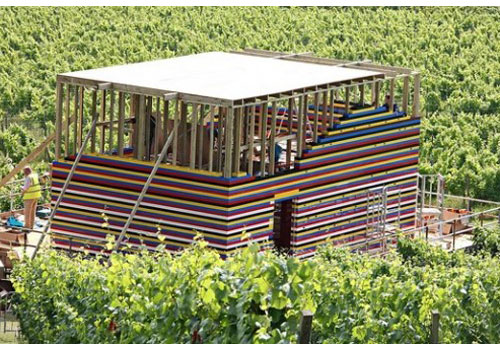
The structural power of the bricks has been demonstrated in extreme ways, such as James May’s LEGO House, a fully functional, full-sized home. Beyond television stunts, many firms use bricks to win international competitions.
The use of LEGO allows for the communication of complex concepts of sustainable urbanism in an immediate way that is understandable even to non-experts, making architectural projects more democratic and accessible.
Why LEGO is the Future of Design
Celebrating LEGO Day means recognizing the importance of modularity and experimentation. Whether it’s repairing a crack in an ancient wall or imagining the city of the future, the brick remains the best ally for anyone looking to give solid form to their ideas.