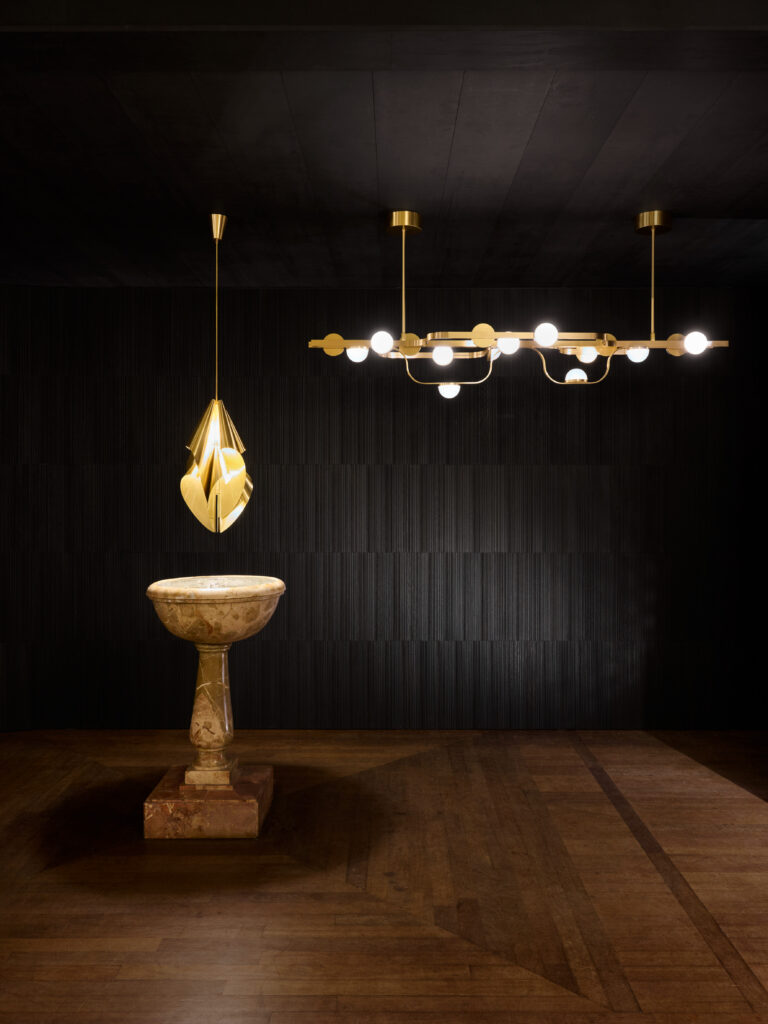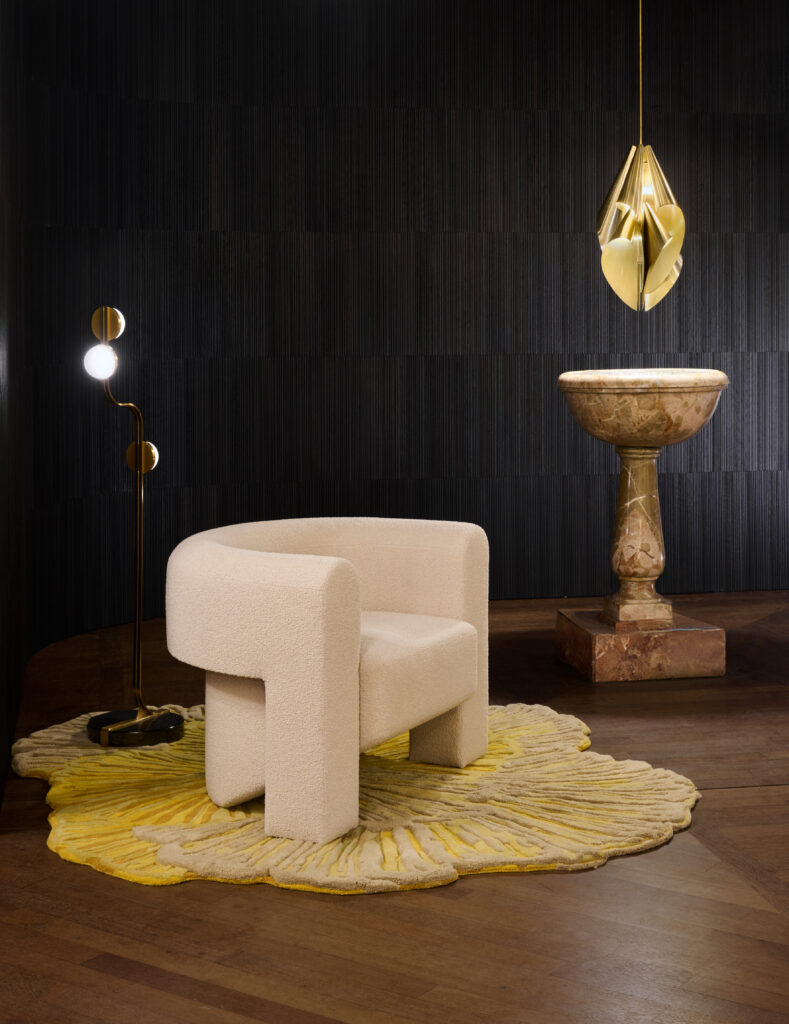

Bodo Sperlein’s Milan installation: a cohesive spatial experience uniting global brands like MEISSEN, LZF, and Lobmeyr in the heart of the Brera Design District
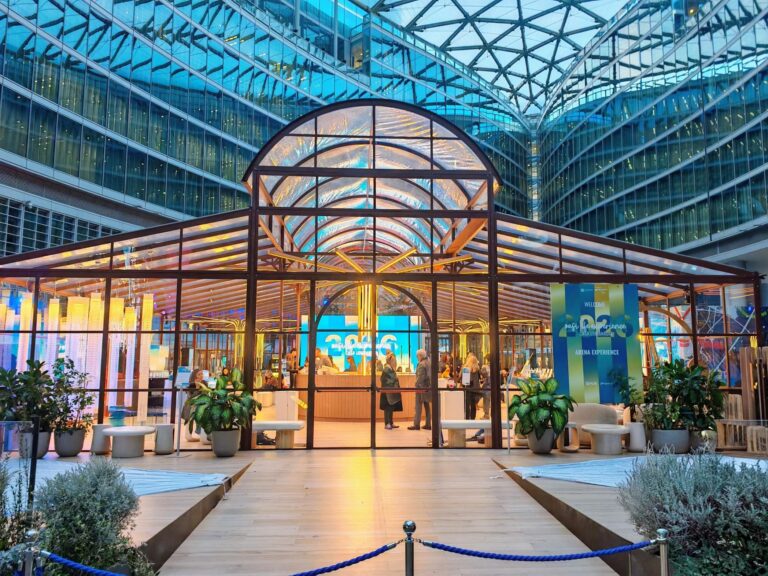
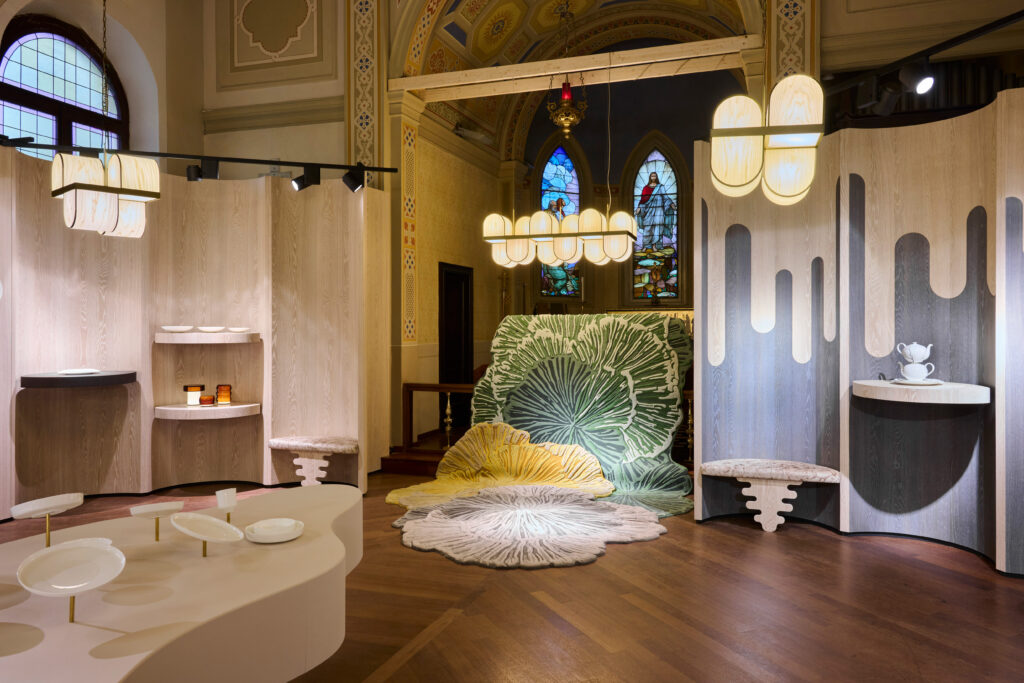
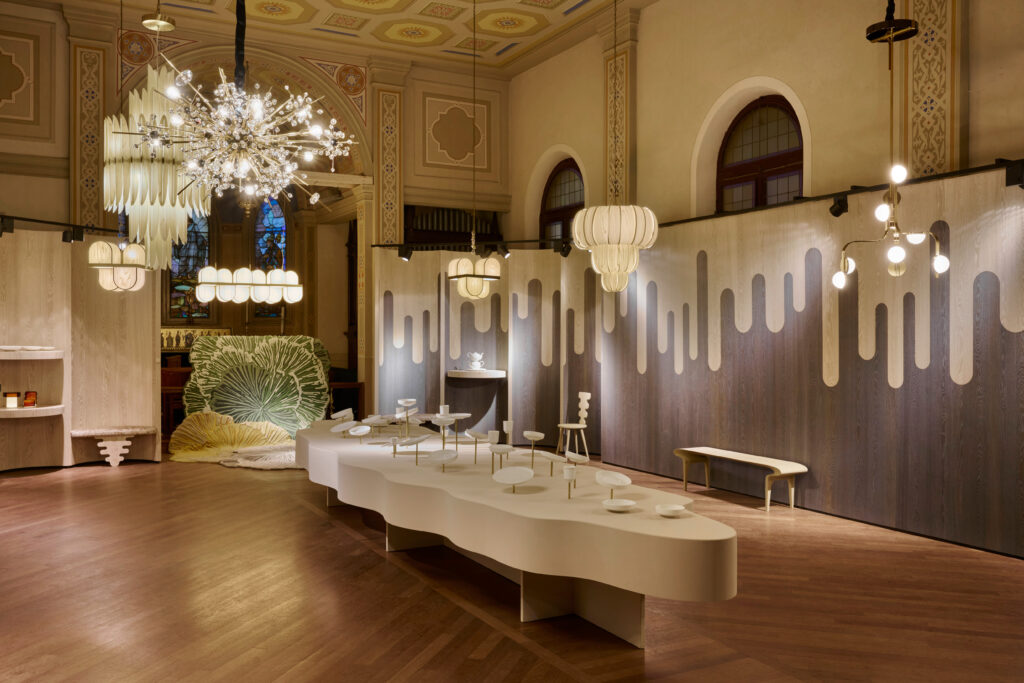
To mark Milan Design Week 2026, London-based designer Bodo Sperlein unveils an ambitious new edition of MENU. The exhibition, curated and architecturally designed by Sperlein himself, transforms the historic All Saints Anglican Church into a unified sensory experience.
Bodo Sperlein’s Milan installation stands out by moving beyond the classic exhibition format: it is not a mere parade of products, but a coherent architectural organism where every collaboration is integrated into a precise material narrative. Utilizing the only terrace on Via Solferino that directly overlooks the street, the showcase creates a visual and conceptual bridge between the church’s structural rigour and the urban energy of Brera.
Alchemy of Materials: Between Light and Matter
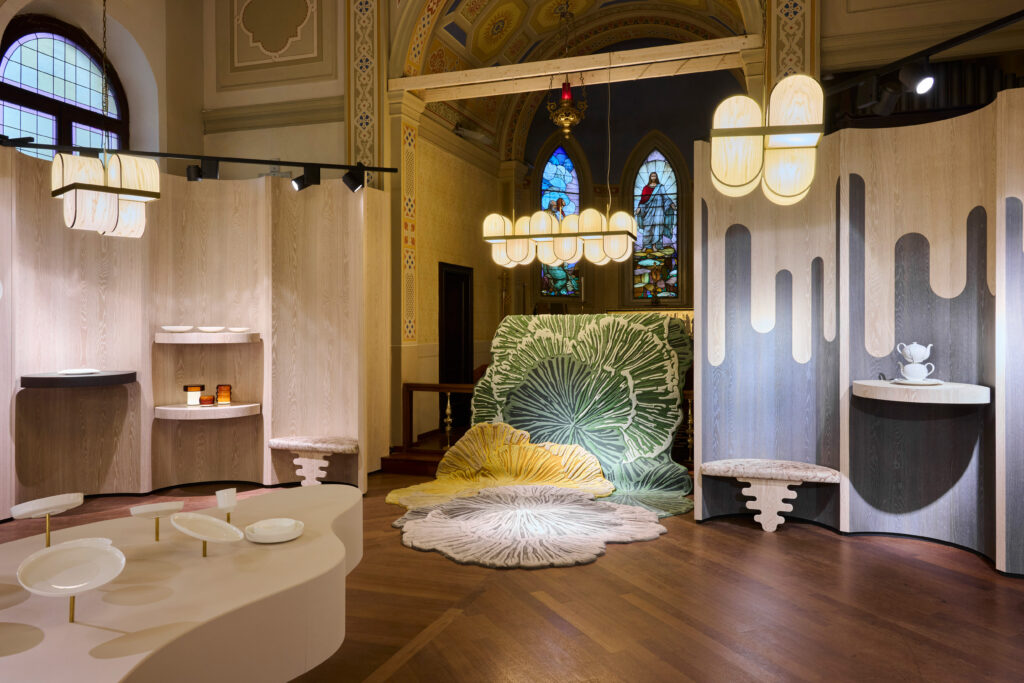
The heart of the project lies in Sperlein’s ability to engage with the building’s structural logic. Bodo Sperlein’s Milan installation employs a calibrated mix of reflective metal, cast concrete, glass, porcelain, and textiles to create a spatial layering that shifts with the changing natural light
Within this setting, visitors can discover world premieres born from prestigious collaborations:
- MEISSEN: Unveils the Phoenix (porcelain defined by fragmented silhouettes) and Edifice collections, where architecture becomes an object.
- Lobmeyr: Expands the Orchid family with hand-crafted brass light sculptures.
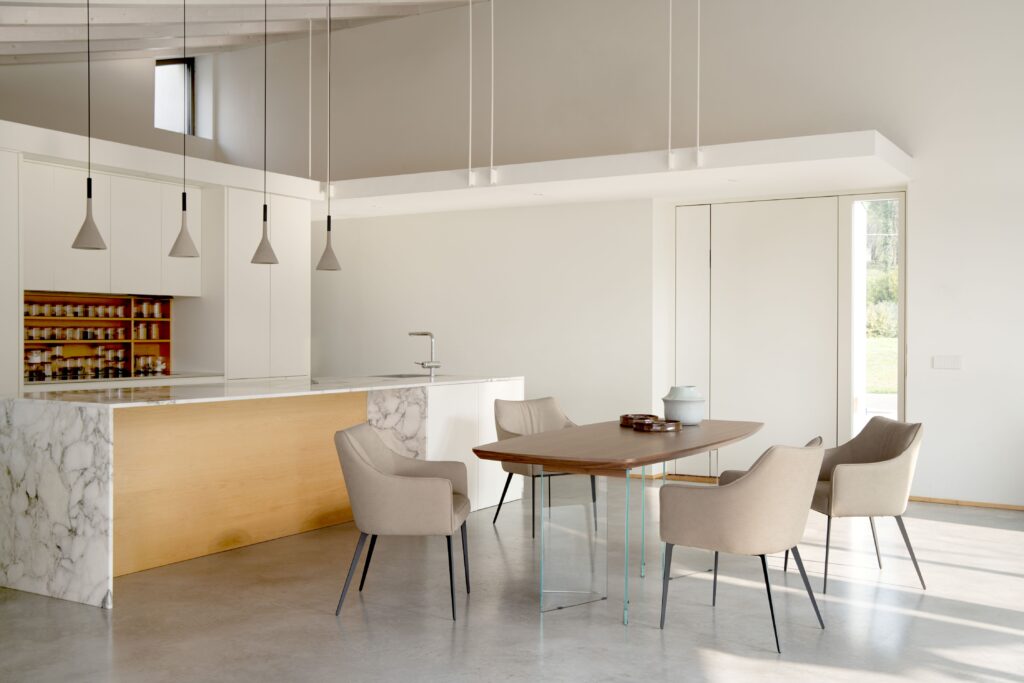
- Orea: Officially launches the S2-Line kitchen, a system combining “S” geometry, lightness, and mineral finishes.
- LZF Lamps: Presents Arabesque, a pendant lamp that challenges the rigidity of sustainable wood to grant it the fluidity of fabric.
Excellence in Craftsmanship and International Vision
Bodo Sperlein’s Milan installation serves as a platform for brands sharing a vision of longevity and research. From the stainless steel walls by Morath to the glass installations by Gustav van Treeck, every element is designed to blend into the architectural context.
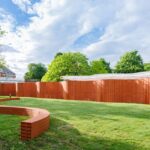
On the terrace, design moves outdoors with the Arcus seating by Garpa and Gravelli, which merge concrete and teak into sculptural forms, and the CASCADE modular systems for the urban landscape. Thanks to the use of natural pigments by Bauwerk Colour, the atmosphere of MENU 2026 confirms itself as one of the most sophisticated and engaging stops of the Fuorisalone, capable of translating the complexity of material research into a pure and universal visual language.