

A former Secessionist courthouse becomes a new landmark of luxury hospitality in Vienna
The opening of Mandarin Oriental Vienna marks a new chapter in the luxury hospitality landscape of the Austrian capital. The project takes shape within a listed former courthouse located in the First District, originally built in 1908, now transformed into a five-star, 138-room hotel following a six-year renovation led by the award-winning studio Goddard Littlefair.
The result is a carefully balanced dialogue between historical gravitas and contemporary elegance, redefining Viennese luxury through narrative-driven interiors that engage with the past while responding to today’s sensibilities of living.
Mandarin Oriental Vienna: a reinvented Secessionist icon
Designed by Austrian architect Alfred Keller, the original building stands as a significant example of the Viennese Secession movement. Rigorous geometries, restrained ornamentation and a solid, measured architectural language formed the conceptual foundation from which Goddard Littlefair began the transformation.
The studio approached the project through an in-depth reading of its historical and cultural context, recognizing Viennese Secession not merely as a style, but as a cultural stance—one oriented toward change and modernity.
Conform and rebel: a narrative-led design approach
At the heart of the concept lies the tension between order and freedom. As a former place of law and judgment, the building carried a powerful symbolic legacy. Goddard Littlefair chose to engage with this imagery through spatial interventions and narrative details that overturn its perception, transforming an institutional architecture into a welcoming and open environment.
As co-founder Martin Goddard explains, the project emerges from the dialogue between two opposing forces—conformity and rebellion—a dualism deeply embedded in Viennese culture. This tension runs throughout the intervention, shaping spatial sequences, room compositions and material choices.
Tradition, craftsmanship and contemporary layering
Working closely with heritage authorities, the studio restored key architectural elements such as staircases, ceilings and original wall finishes, seamlessly integrating the new design language with the historic fabric.
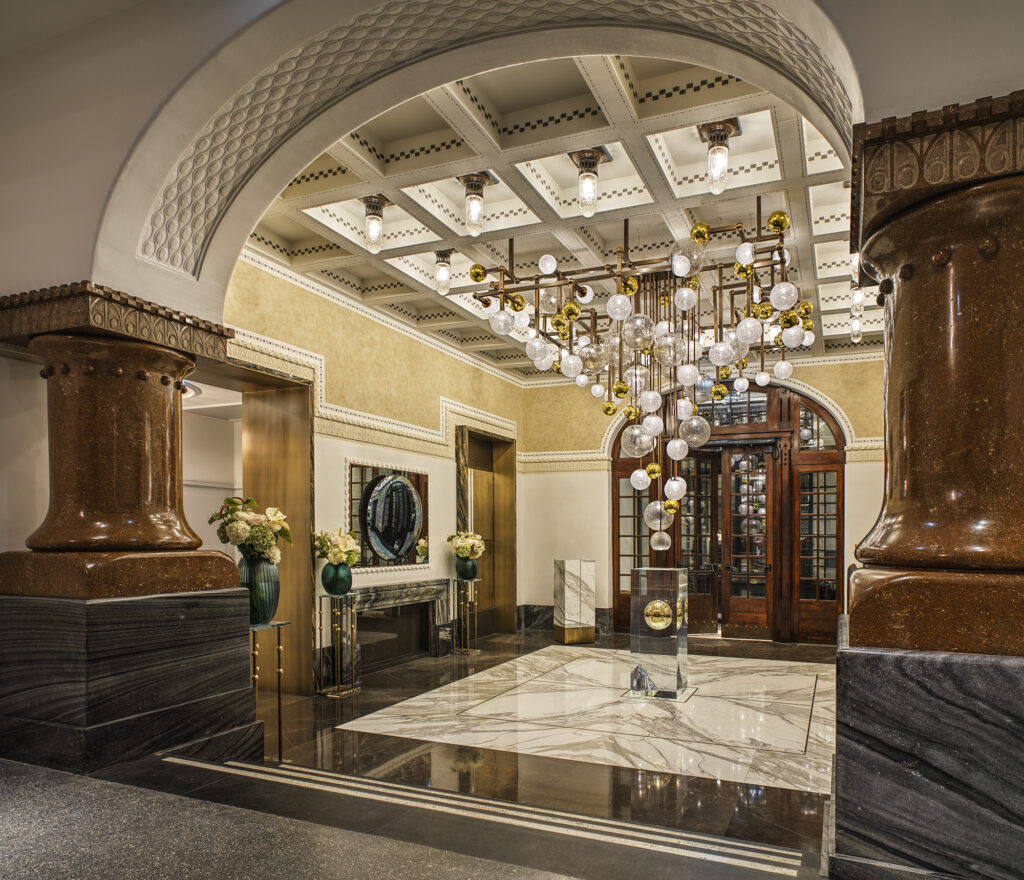
The entrance unfolds through a restored vestibule marked by a sculptural chandelier inspired by the sound of a champagne cork popping—a symbolic gesture introducing a sense of lightness. A generous corridor wraps around the central courtyard, guiding guests through a sequence of spaces designed to spark curiosity and discovery.
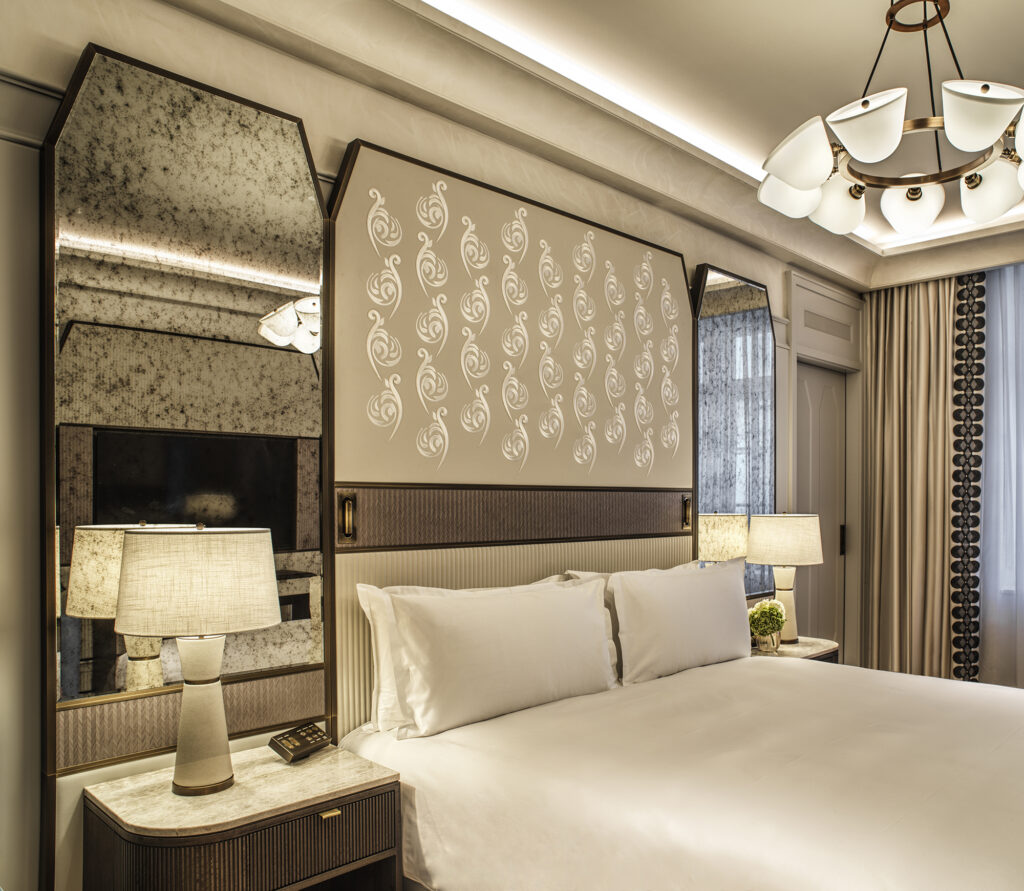
The material palette combines light plaster finishes, expressive marbles and naturally stained woods, enriched with aged brass details and gold-leaf accents. Custom lighting solutions crafted by local artisans further emphasize the value of provenance and craftsmanship.
Rooms conceived as private residences
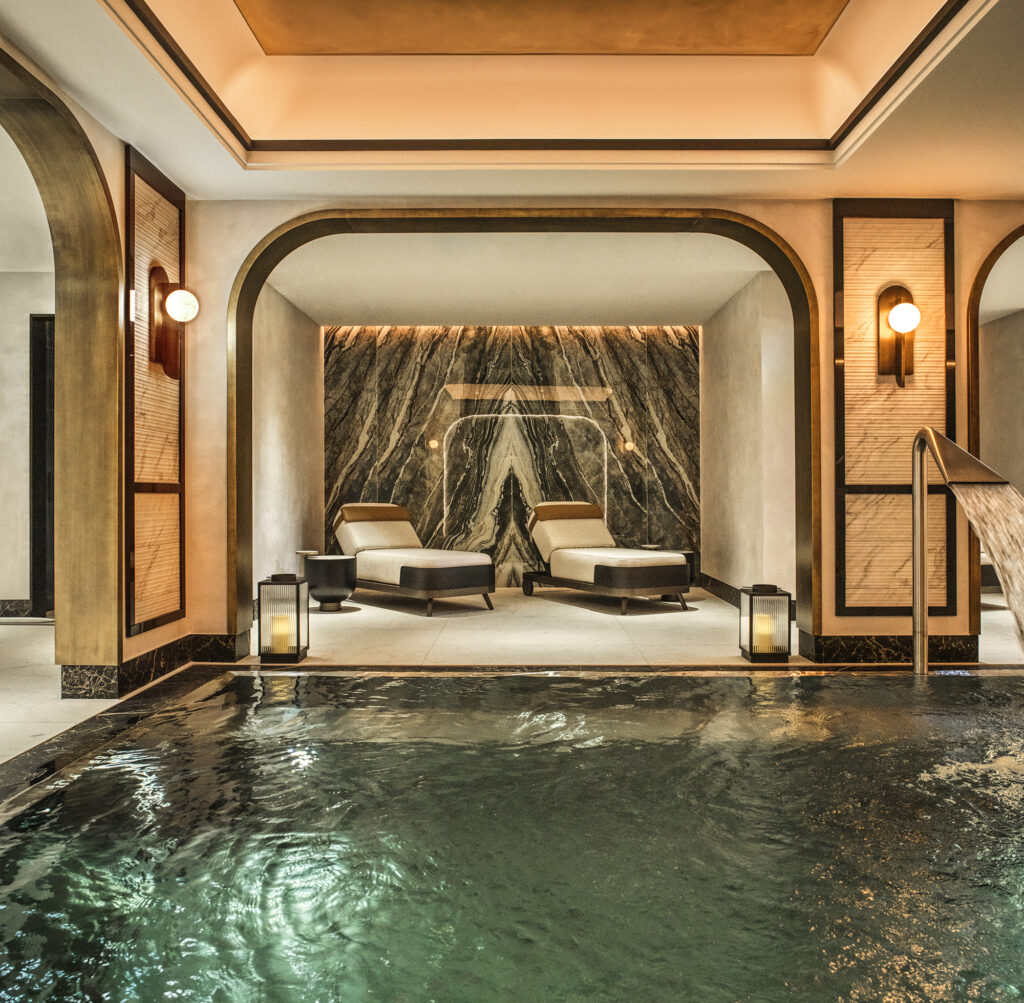
In the guestrooms and suites, the design responds to the constraints of the historic architecture, including irregular layouts, existing window openings and varying ceiling heights. These conditions give rise to a collection of diverse environments, unified by a residential, luminous and restrained character.
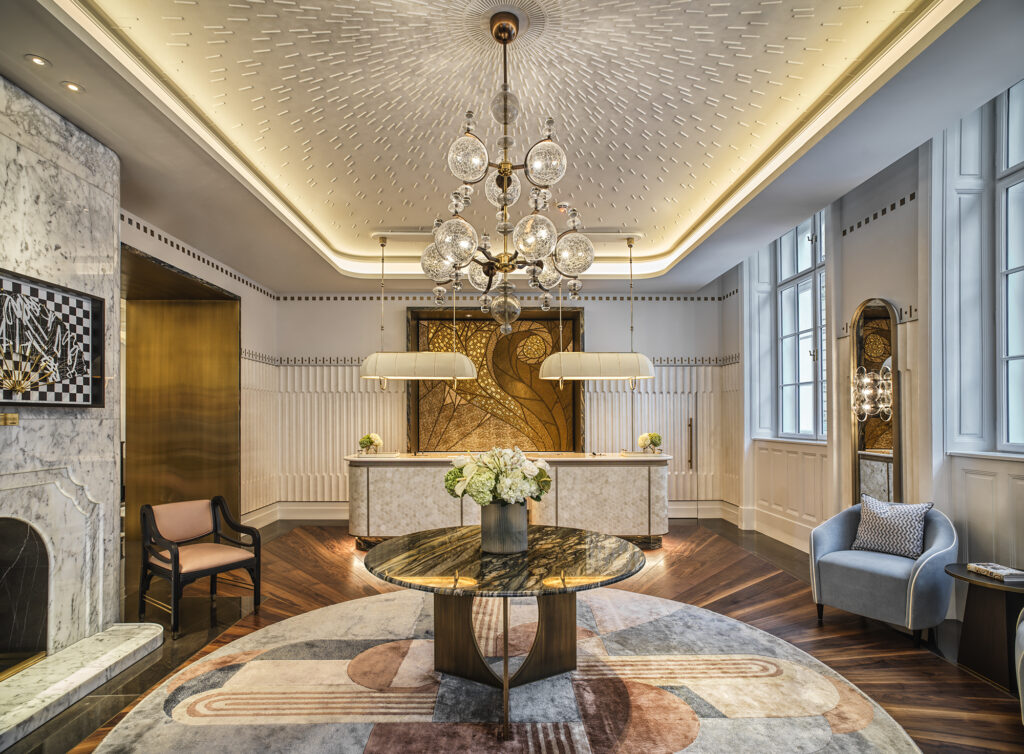
Soft shades of blush pink and blue echo the atmosphere of the city, while structured textiles and graphic patterns draw inspiration from the works of Koloman Moser and Josef Hoffmann. Bespoke furniture and joinery establish a continuous dialogue between Viennese artisanal tradition and contemporary comfort.
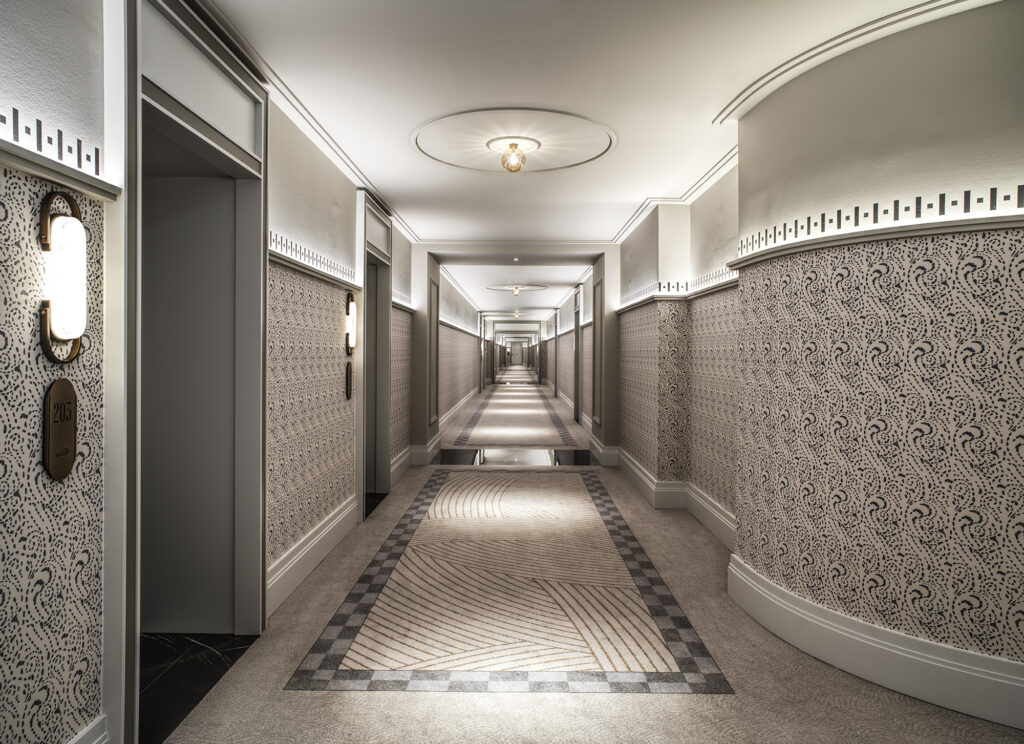
Bathrooms adopt a timeless black-and-white palette, with mosaic floors and carefully calibrated graphic details. Corridors and suites extend the visual narrative through hand-painted wall coverings and custom carpets derived from the building’s original motifs.
Living within heritage
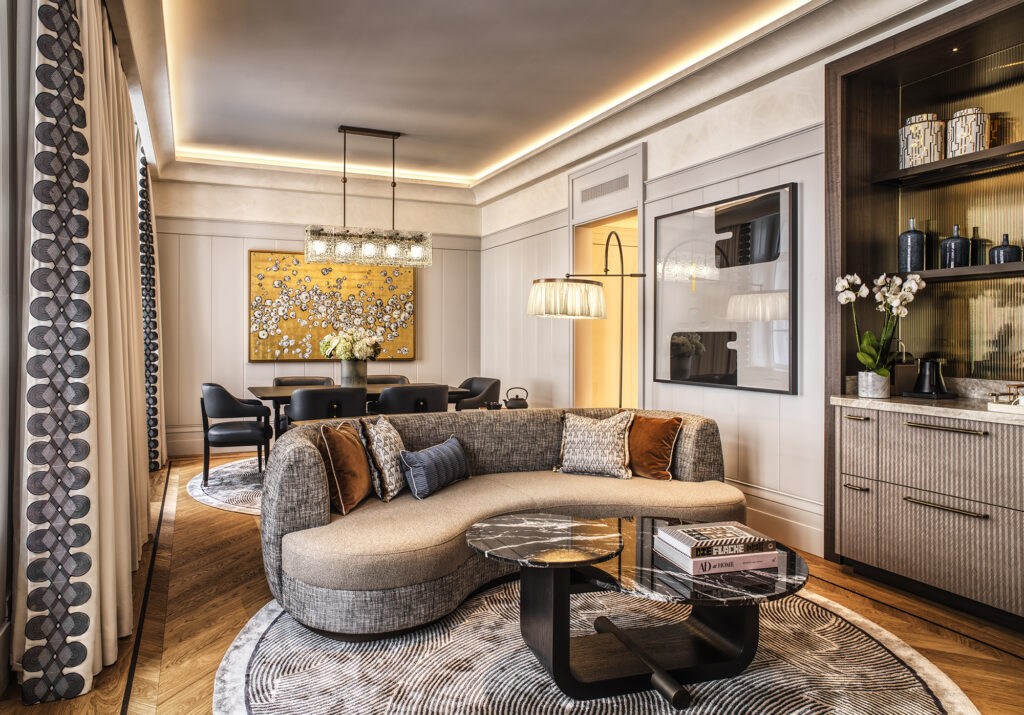
Alongside the hotel, Goddard Littlefair also designed 24 private residences, featuring independent entrances, concierge services and dedicated shared spaces. Here, the design language becomes more essential and relaxed, focusing on comfort, balance and intimacy.
Historic wood paneling, soft lighting and a carefully layered material approach define spaces such as the Le Petit-Salon, conceived as a private retreat that remains fully aligned with the architectural identity of the building.
A new vision of Viennese luxury
With Mandarin Oriental Vienna, Goddard Littlefair proposes a vision of luxury hospitality that treats history as a living resource. The project does not seek contrast, but rather a conscious continuity, translating architectural heritage into a contemporary experience.
Once defined by formality and rigor, the former courthouse is now transformed into a place of character, elegance and connection—where architecture, design and storytelling converge to establish a new destination in Vienna’s cultural heart.
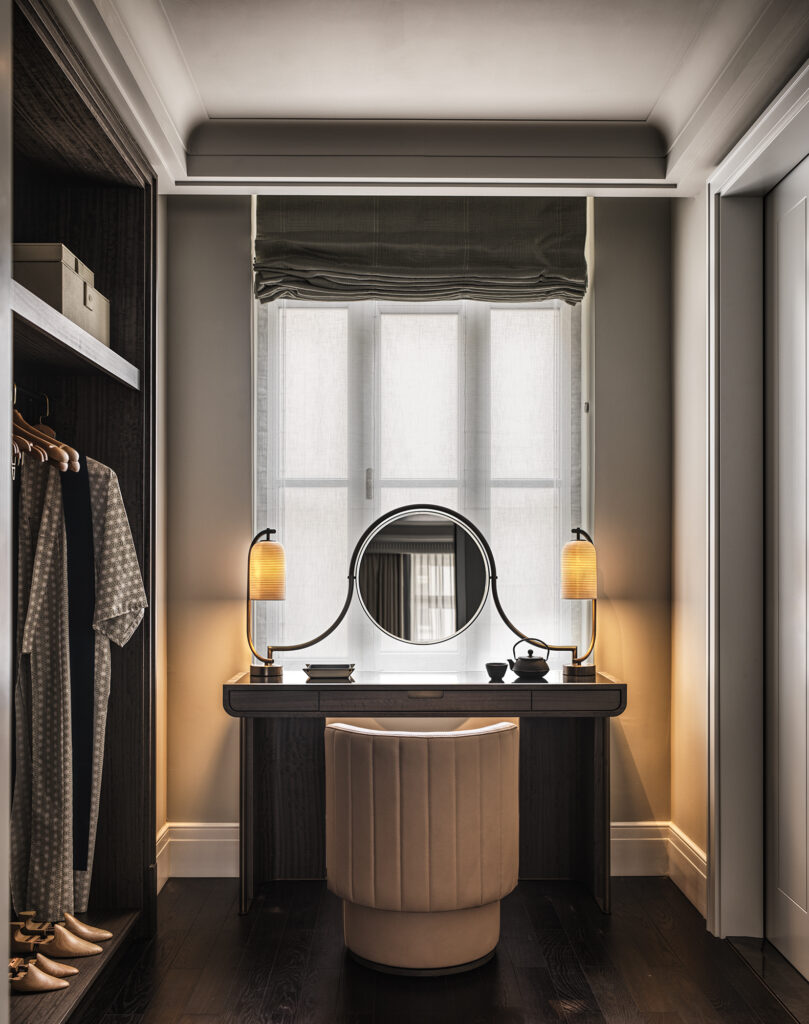
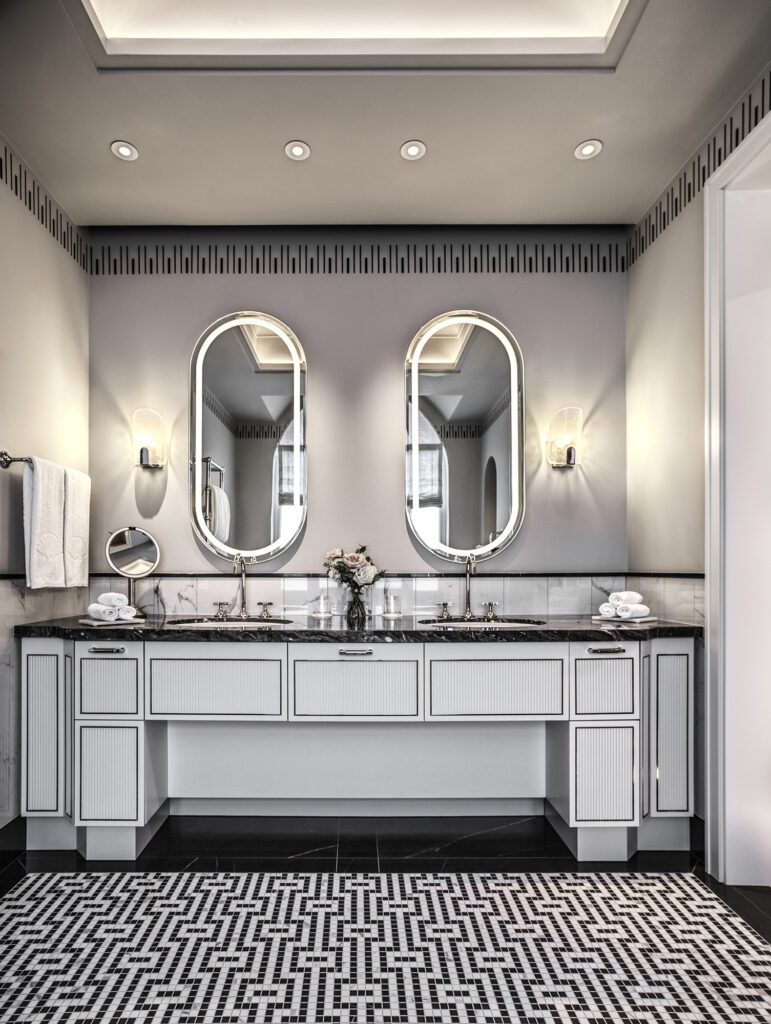
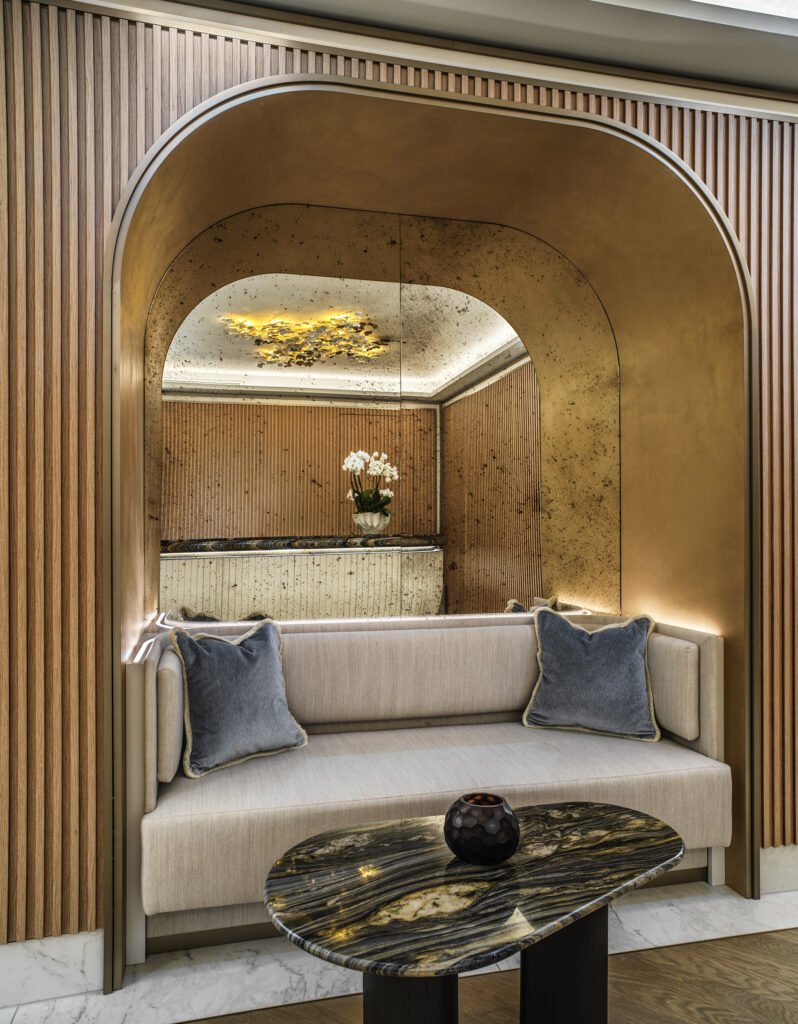
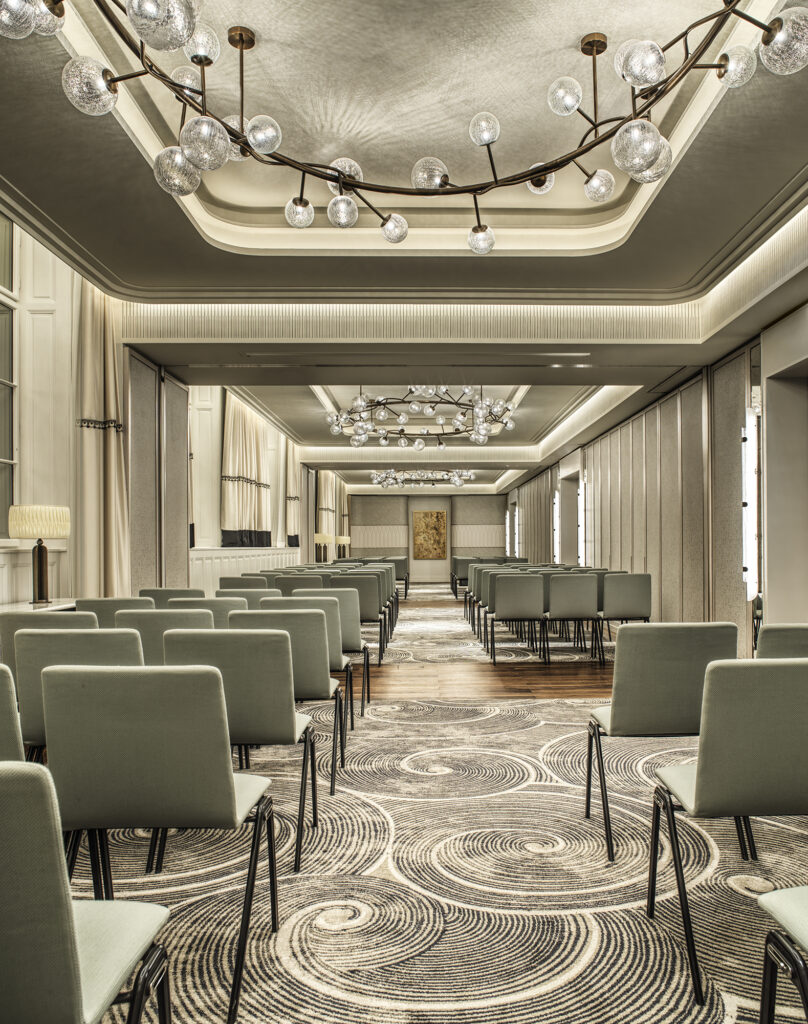
Photo Mel Yates