
Vittorio Grassi Architects inaugurates a fluid, barrier-free arena debuting with the 2026 Italian Para-Archery Championships
In the landscape of contemporary architecture, it is rare for a work to blend avant-garde aesthetics and social function as naturally as the new Lamezia Terme Sports Palace. Designed by Vittorio Grassi Architects, the structure is not only a new landmark for Southern Italy but a living manifesto of how design can dismantle every obstacle. Its official debut takes place with a highly symbolic event: the 2026 Italian Indoor Para-Archery Championships, a competition that highlights the unbreakable link between sport, architecture, and inclusion.
A New Paradigm: Sport, Architecture, and Inclusion
The inauguration, held during the “Barrier-Free Sport Open Week,” confirmed the project’s mission. Architect Marco Aloisini, partner at Vittorio Grassi Architects, explained how accessibility was not an afterthought, but the beating heart of the creative process.
Wide spaces, fluid pathways, and the total absence of physical obstacles allow Paralympic athletes to navigate the space with complete autonomy. This approach transforms the building into a social infrastructure where the combination of sport, architecture, and inclusion becomes a tangible reality, offering the community a place where everyone feels represented and welcomed.
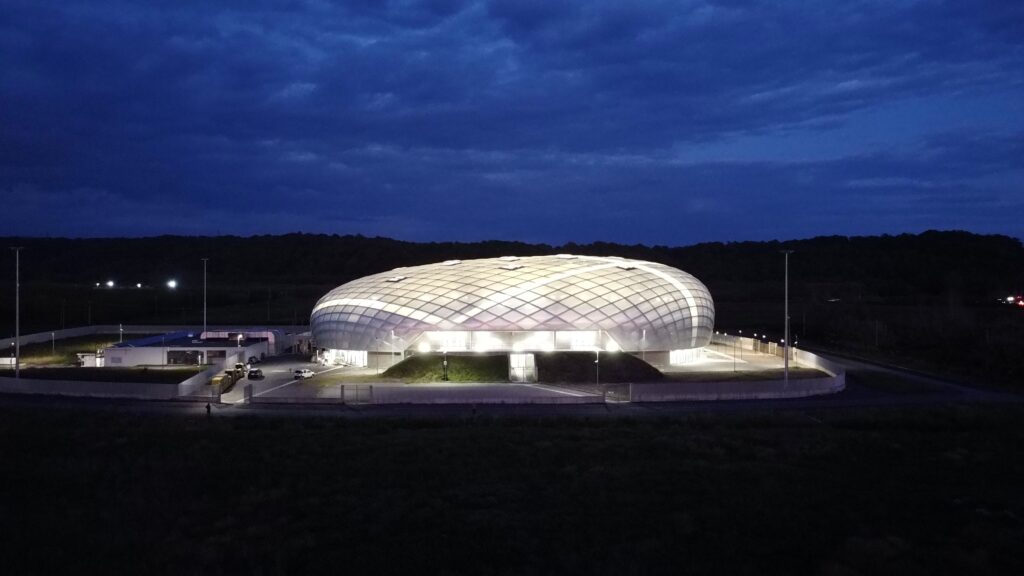
Organic Aesthetics: The “Pebble” of the Lametine Coast
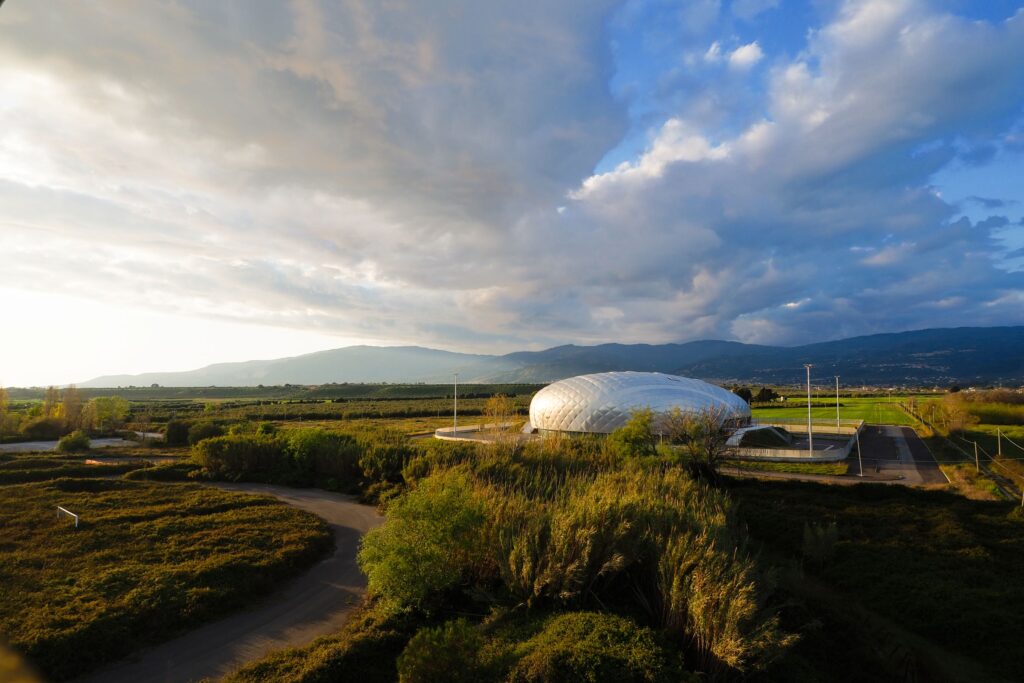
The building’s formal inspiration stems from the local territory: its fluid, asymmetrical shape recalls the sea-polished pebbles of the Calabrian coast. The architecture stands out for an almost ethereal lightness, thanks to a steel lattice roof covered by a triple translucent membrane made of 900 ETFE cushions.
This technological skin is more than just an aesthetic choice; it is an avant-garde engineering solution. The constant-pressure system ensures optimal natural lighting while simultaneously reducing summer overheating and winter heat loss.
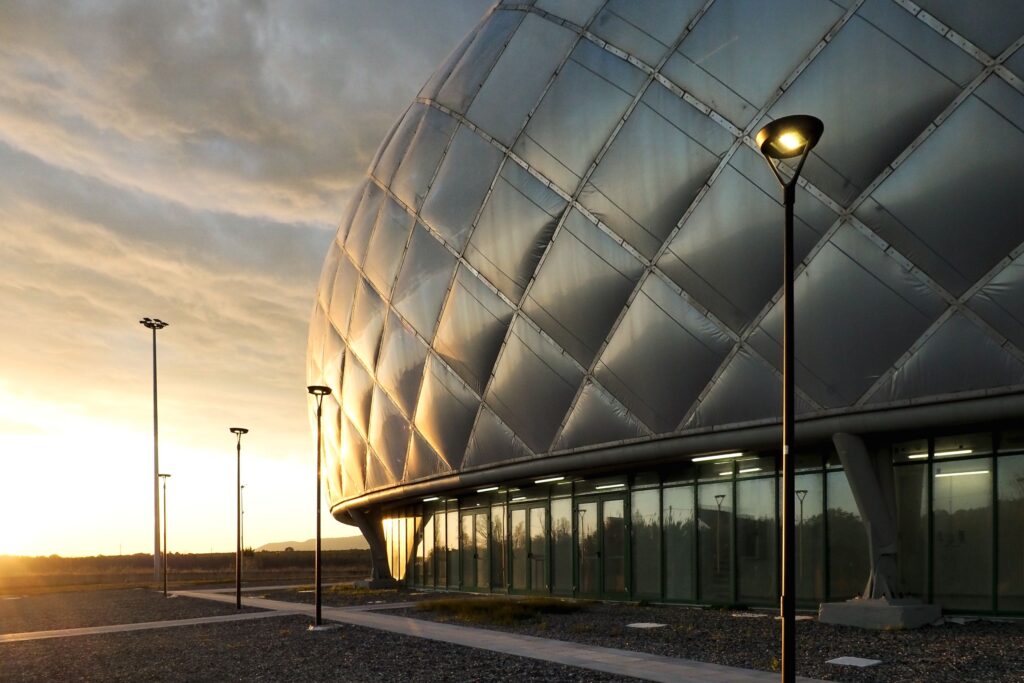
Performance and Sustainability Serving the Region
With a surface area of 8,000 square meters and a capacity ranging from 3,500 to 4,300 seats (thanks to telescopic grandstands), the Sports Palace is a multifunctional center of excellence. Key technical strengths include:
- Optimized Visibility: seating designed to bring the audience into the heart of the action.
- Natural Ventilation: the roof’s shape captures prevailing winds to passively cool the interior.
- Strategic Connectivity: Located near the airport and major road axes, it serves as a hub for the entire Calabria region.
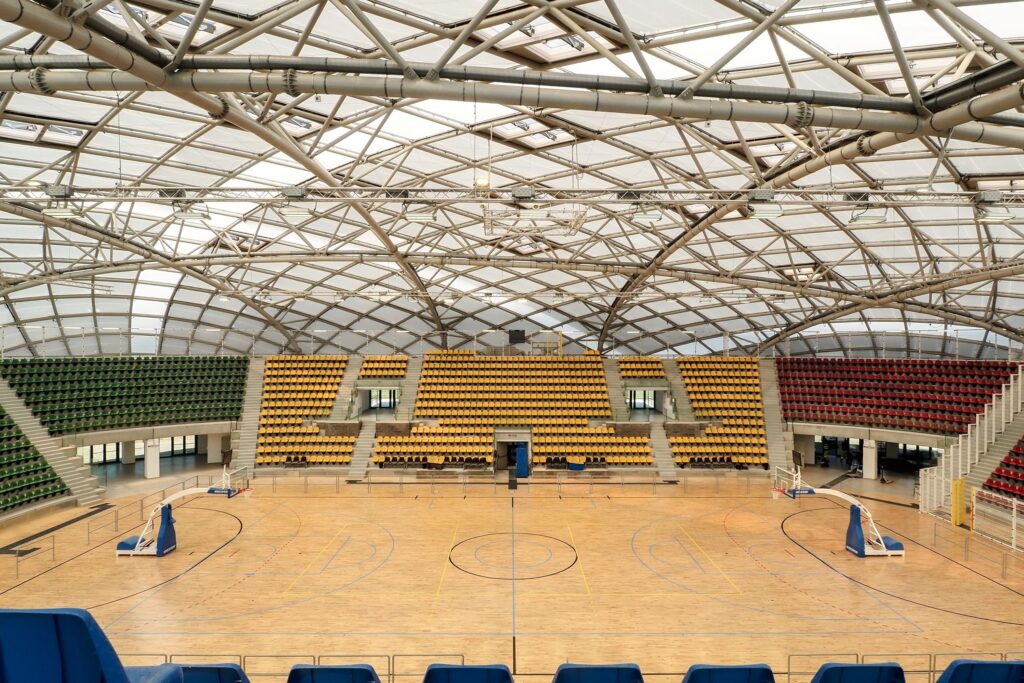
Un ponte culturale verso il paesaggio
The dialogue with the outdoors is maintained through large windows on the upper ring, which transform the surrounding landscape into a natural backdrop for those inside. The dynamism of the interior spaces, designed for fast and safe movement, reflects the philosophy of a firm that places user well-being at the center of its research.
As archers release their arrows for national titles, the Lamezia Terme Sports Palace projects itself into the future as a virtuous example. It is proof that when spaces are designed for sport, architecture, and inclusion, the final result is much more than a building: it is a step forward for society as a whole. Photo by Ines Caro de Sousa
Ph Ines Caro de Sousa