




Timber Architecture Meets the Karelian Landscape
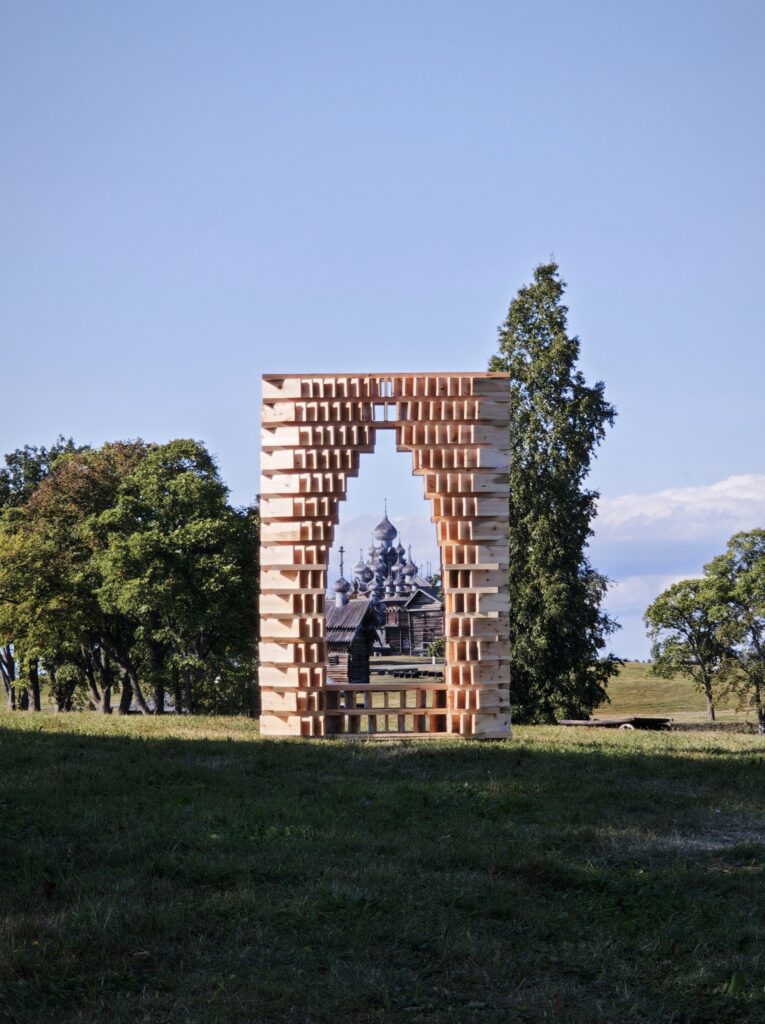
The Lens is a new architectural installation located on Kizhi Island, set in Lake Onega within the Republic of Karelia. Situated at the northern tip of the island in a remote area of the museum reserve, the structure engages in a direct visual dialogue with the Kizhi Pogost — the historic wooden church ensemble inscribed on the UNESCO World Heritage List in 1990. Positioned at a prime vantage point, the portal opens a rare north-to-south perspective where the multi-domed churches align into a single silhouette, framed by an inner contour echoing traditional cupolas. The panorama also encompasses the historic windmill and the Chapel of the Archangel Michael.
Architectural Concept and Reinterpretation of the Lemekh
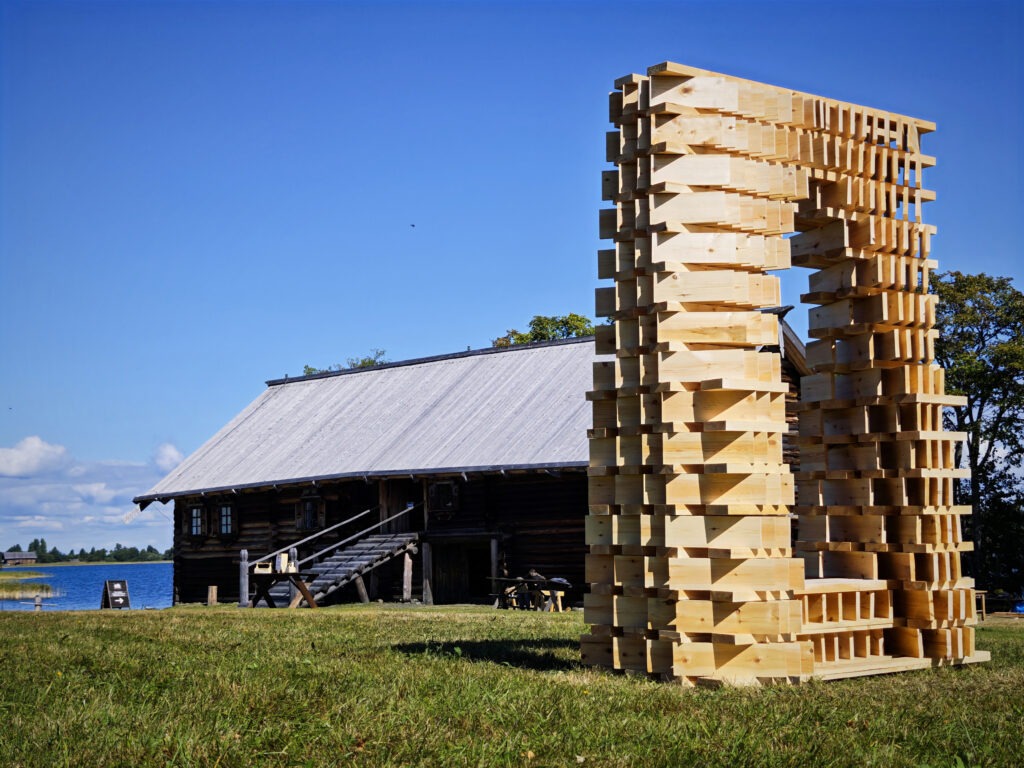
Designed as a spatial portal with an integrated bench, the art object acts as a viewing frame for the panoramas of the Pogost. The inner silhouette of the opening mirrors the iconic onion domes of the churches, translating local building traditions into a contemporary formal language. The installation functions as an active lens that enhances the surrounding natural landscape.
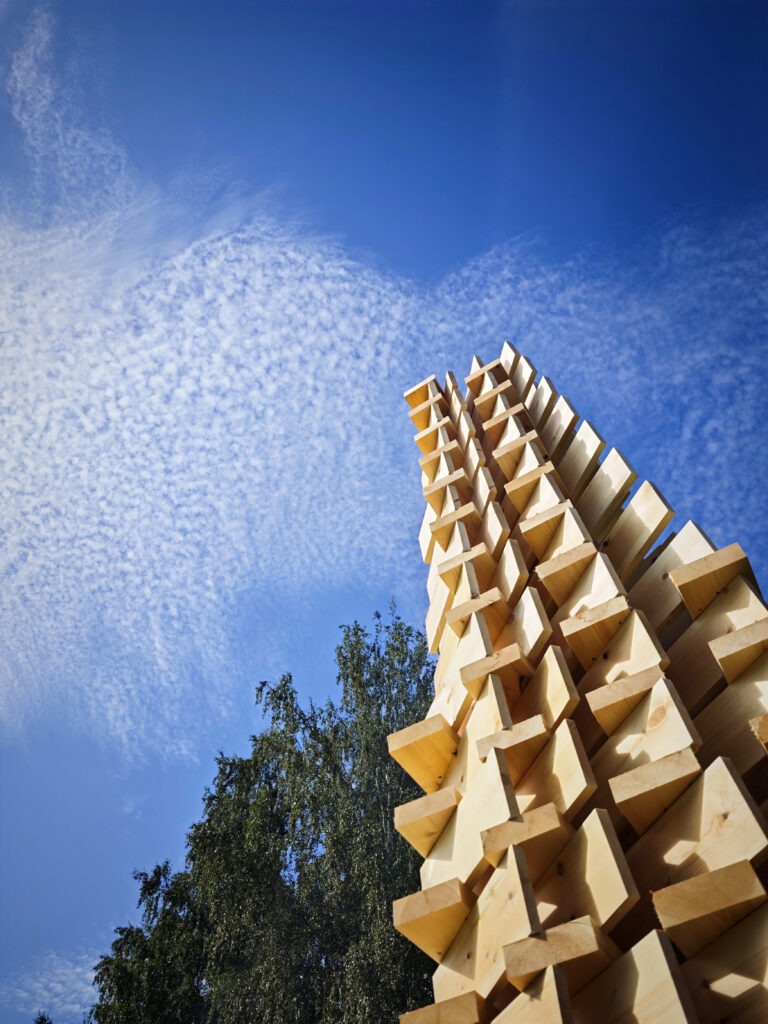
The core element of the design lies in its reference to the lemekh — the traditional wooden shingles historically used across the Russian North to cover the curved surfaces of church domes. The installation scales this principle across its entire 2.5 m² volume:
- Material: crafted entirely from northern pine formatted into modular slats.
- Tectonic Language: the rhythmic slatted structure reinterprets traditional lemekh shingles, creating dynamic visual depth.
- Light and Shadow: the relief surface generates interplay of light and shade that transforms with changing viewing angles and natural lighting conditions.
- Solar Alignment: sited directly on a north–south axis, the orientation was verified at noon when the object’s shadow falls precisely along the visual line toward the Pogost.
Project Team
The project was designed by architect Evgeny Makarenko (Lead Architect) alongside Angelika Manzhiley, Alexey Ushakov, and Natalia Abarinova, with construction executed by Mikhail Shatokhin and Feodor Dobysh.